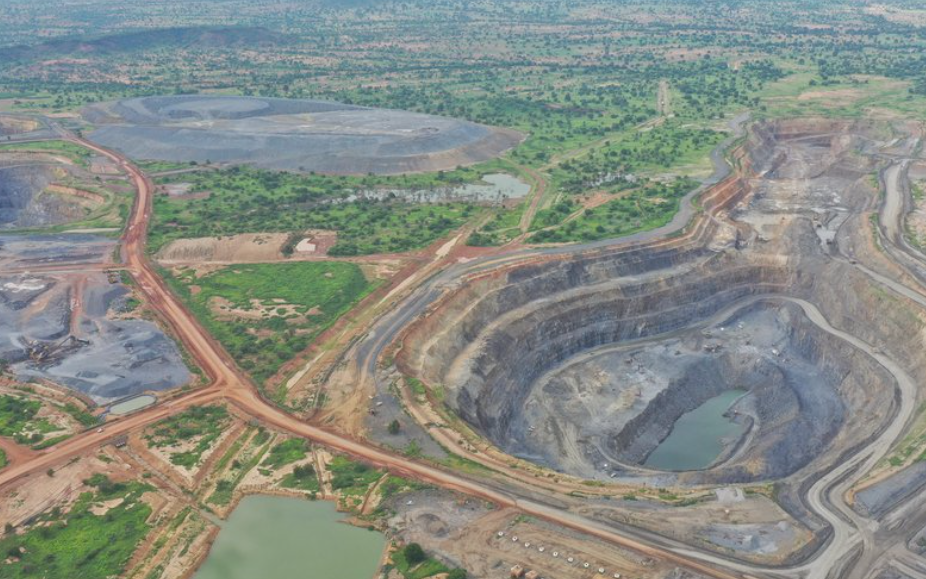
The West Australian - Africa enjoys mining resurgence as WA companies chase discoveries in gold, battery metals
A resurgence of mining activity in frontier destinations such as Africa comes as companies are being forced to chase projects further afield amid increased competition in mature jurisdictions like WA.
08 May 2023
A resurgence of mining activity in frontier destinations such as Africa comes as companies are being forced to chase projects further afield amid increased competition in mature jurisdictions like WA.
A range of gold miners, including mid-tier Perth-based companies such as Perseus Mining and West African Resources to juniors such as OreCorp and Predictive Discovery, are working on projects across the continent.
However, companies also are chasing opportunities in greener metals needed to produce electric vehicles and renewable technologies, with battery metals players seeing huge potential in Africa’s rich lithium reserves.
The most recent data from Subiaco-based executive and senior management search firm Acacia revealed a surge in local companies focused on international assets — and in particular, those in Africa.
It showed 89 per cent of listed resources companies represented by the firm had international assets in the December quarter, and of those, 37.5 per cent were in Africa.
That compares to just 29 per cent at the same time last financial year, when no companies were interested in the continent.
Of the 13 “best undeveloped projects” listed in a November report by stockbroker Argonaut, six were based in Africa.
Argonaut metals and mining research analyst George Ross said a hunger for high-quality assets was pushing more companies to explore riskier jurisdictions.
“We’ve got a very mature mining industry and exploration space (in WA) and even though we’re constantly probing the new frontiers with new technology and drilling, at the end of the day you can go to Africa and find assets quite literally sticking out of the ground,” he said.
“There’s a hell of a lot of companies on the market now so it’s just natural they’re going to be chasing projects further afield.”
Mr Ross’ colleague Ben Crooks said risk becomes “more palatable” as companies display consistent returns.
“The saying is if you want to see elephants, go to elephant country,” he said.
Acacia director Laura Grierson said the end of COVID-19 travel restrictions was driving more companies to explore opportunities overseas, adding that North America was “as busy for us as Africa”.
Companies are also trying to meet demand for renewable technologies such as electric vehicles, charging infrastructure, solar panels and wind turbines.
Acacia director Laura Grierson Credit: stephanie white / TheWest
“The supply needed for that transition to clean energy means companies have to look further afield than just Tier-1 jurisdictions now to get the levels of lithium, nickel, cobalt, copper and everything else we need to move forward,” Ms Grierson said.
“It’s now also looking at those greener metals and what resources are in Africa they can be capitalising on.”
Acacia also has clients mining in Africa for mineral sands, uranium and rare earths.
West African Resources executive chairman and founder Richard Hyde said the reason for renewed interest in the continent was simple.
“It’s been driven by demand from shareholders for us to make money,” he told The West Australian.
“If you look at the companies generating free cash-flow at the moment generally they’re companies in new jurisdictions or frontier destinations.”
West African is focused on the military coup-prone West African nation of Burkina Faso, where it first started producing gold at its Sanbrado project in March 2020.
Mr Hyde noted many new startups or restarts of projects in WA had run into trouble with the exception of Capricorn Metals’ Karlawinda project in the Pilbara and the Gruyere joint venture between Gold Fields and Gold Road Resources, located 200km east of Laverton.
Embattled gold explorer Gascoyne Resources — which only emerged from administration in October 2020 — found itself on the brink of collapse again late last year after mothballing its Dalgaranga project in the face of rising costs and “sub-par operational performance”. The company has since announced a $50 million recapitalisation plan.
Dacian Gold, recently acquired by Raleigh Finlayson’s Genesis Minerals, also mothballed its Mt Morgans mine in WA’s northern goldfields region last year following inflationary pressures.
“If you look at new investment in West Australian projects, what investors and bankers would deem a safe jurisdiction have lost a lot of money for shareholders,” Mr Hyde said.
“It’s this perception of jurisdictional risk versus project risk . . . we’ve chased good projects in more challenging jurisdictions because we know the project is going to make money rather than an easy jurisdiction like WA or some of the North American jurisdictions.”
Mr Hyde said labour shortages in WA provided a challenging operating environment given companies are competing for talent across booming commodities such as iron ore and gold.
Richard Hyde, executive chairman of West African Resources. Credit: Ian Munro/The West Australian
“On top of that there’s a lack of new discoveries,” he said, adding many new projects were now being found underneath pits mined decades ago or under salt lakes or alluvial cover.
However, Perseus Mining chief executive Jeff Quartermaine said the operating environment in Africa had its challenges, pointing out royalties are “substantially higher” and there are significant costs associated with security.
“If you look at the operations in Africa, we don’t get a free kick relative to Western Australia,” he said.
Mr Quartermaine also said salaries for professionals in Ghana are roughly “on par with what you pay in Western Australia”.
“Each of the jurisdictions has its own attributes and if you want to perform well you have to manage your business well,” Mr Quartermaine said, noting opportunity was “not uniform” across the continent.
“If you manage your business poorly in West Africa I can assure you you’ll go out of business just as quickly as you will in Australia or anywhere else for that matter.”
Perseus has a market capitalisation of about $3 billion and operates three gold mines in Africa: Edikan in Ghana, and Sissingué and Yaouré in Côte d’Ivoire.
Perseus Mining's Edikan operation Credit: Perseus Mining
OreCorp managing director Henk Diedrich said he was seeing a significant increase in mining investment in Tanzania — where it developing the Nyanzaga gold project — “not only through existing producers such as Barrick Gold and AngloGold Ashanti but also the entry of majors like BHP investing in mining projects”.
BHP, which is seeking to increase its exposure to so-called “future facing commodities”, last year committed to invest up to $US100 million to develop the Kabanga nickel project.
“We have also noticed an increase in activity with several projects in the battery minerals space gaining momentum,” Mr Diedrich said.
Andrew Pardey, managing director of Predictive Discovery, said mining codes in West African countries were solid and the timeframe from discovery to production could happen quickly.
“There is also a great pool of skilled labour, and this is typified by the fact that the world’s largest gold miners are very active in the continent, particularly Barrick, Newmont, Gold Fields and AngloGold Ashanti,” he said.
Mr Pardey said Predictive remained focused on its Bankan gold project in Guinea, which he described as the least explored jurisdiction for gold in West Africa.